01 The brief: what was hard
In 2018 most marketers knew GumGum for its in-image ad unit. The marketing team needed brands and agencies to see an AI company instead. That is hard to show, because computer vision does its work out of sight.
So we picked a test people could take themselves: can a robot's painting pass for human work? The answer only counts if the test is fair. The robot and the artists needed the same inputs, the same canvas and the same deadline. Readers could not know who made what until they had guessed.
It also had to be cheap. One small budget paid for the research and writing, the robot and artist commissions, a printed guide, video, a microsite and modest paid media.
02 The process
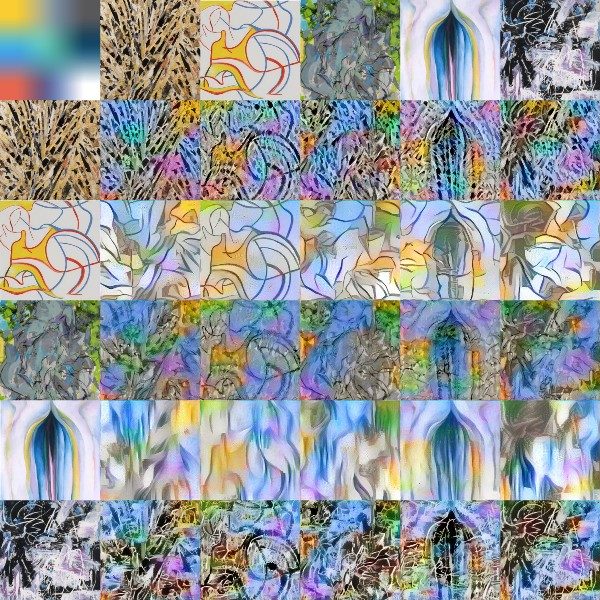
I sent every maker the same brief. It held five reference paintings, by Willem de Kooning, Elaine de Kooning, Lee Krasner, Michael West and Georgia O'Keeffe, plus one color palette and one canvas size: 18 by 24 inches. There were no other rules.
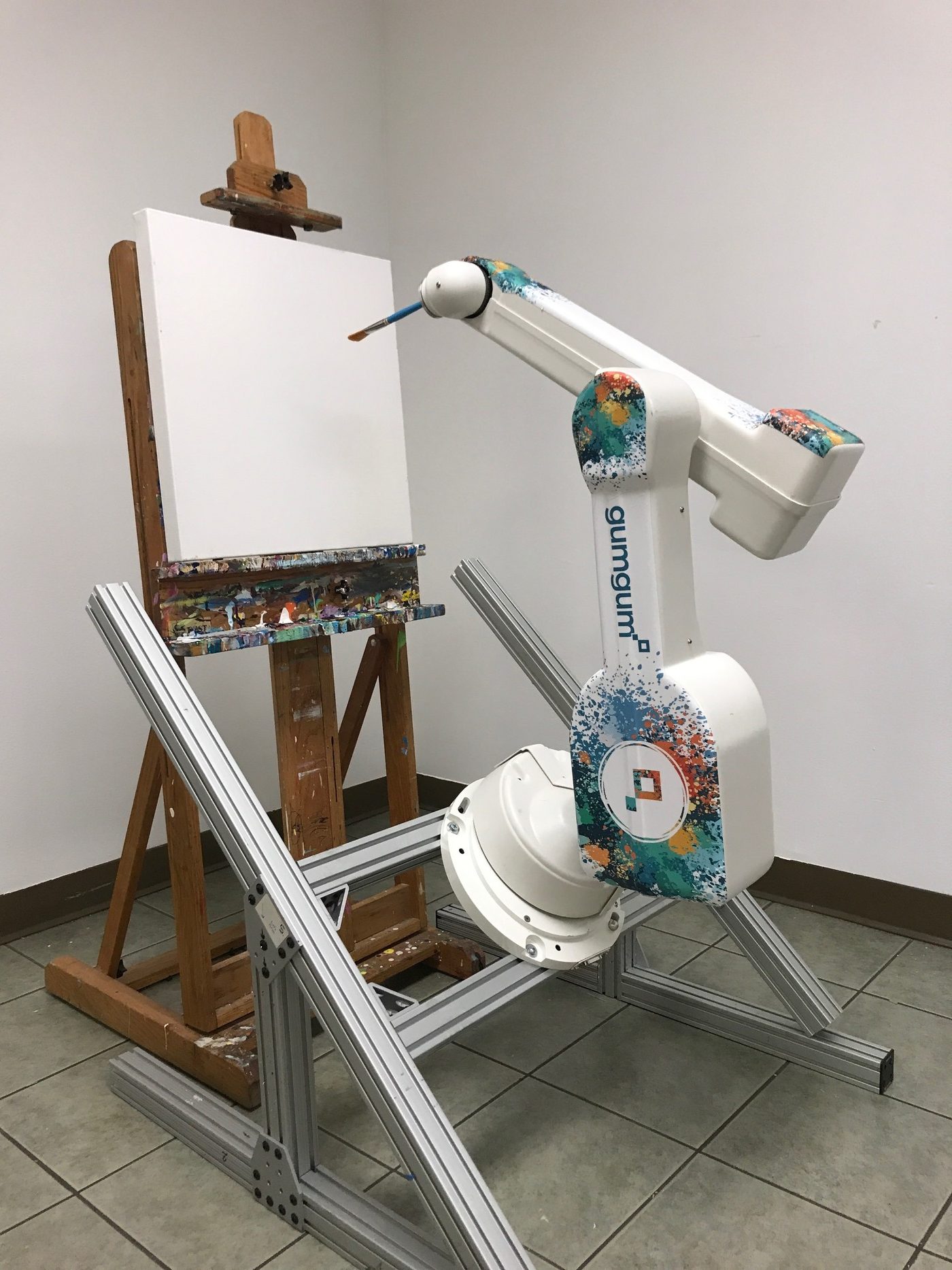
The six makers were Pindar Van Arman's Cloudpainter, a robot that paints with a real brush and checks its canvas through a camera, and five human artists: Briahna Wenke, Cam Floyd, Leandro Castelao, Marina Esmeraldo, and Andrey Smirny and Denis Sharabarin of Computer Craphics. They worked in paint, illustration, digital painting and 3D.
The schedule ran from mid-May to final art on June 8, 2018, with check-ins for sketches, progress and near-final work. Each maker sent sketches, versions and behind-the-scenes photos. Those became the artist spreads in the book and the process stories in the web guide.
Deanna Zammit wrote the essay. It drew on Ahmed Elgammal's research at the Rutgers Art and AI Lab and on Van Arman's account of his own code, and it reached a verdict on machine art: “not art, at least not yet.” Chris Mallinson directed the design through four rounds of layouts. Johnny Shryock shot the photography. Ben Plomion was executive producer.
03 One brief, six makers, one blind test: the production line I ran
- briefEvery maker got the same five reference paintings, the same palette and the same 18 by 24 inch canvas.
- commissionFive human artists and one robot painter signed on, with a contract or a release form for each piece.
- check-insSet reviews for sketches, progress and near-final work kept six makers on one four-week clock.
- documentEach maker sent sketches, versions and behind-the-scenes shots, and the robot's side came as time-lapse clips.
- publishThe essay, the artist spreads and the canvases went into a printed book, a PDF and a web guide.
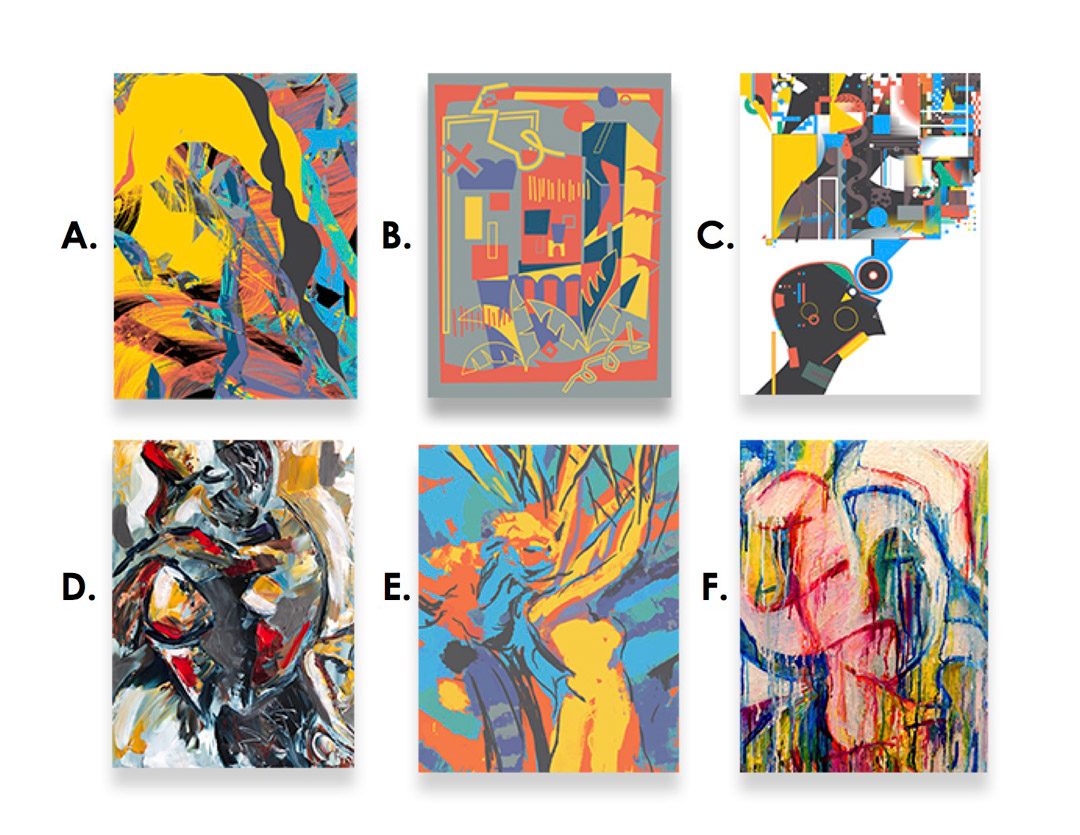
- blind testA live audience and online readers saw six unlabeled works, A to F, picked the robot's, and then got the reveal.
04 The result
- 2 awardsMost Effective Content Marketing Campaign and the Chairman's Awardsource: 2019 Effective Digital Marketing Awards
- 231Ksocial impressionssource: GumGum social results report
- 28Kvideo viewssource: GumGum social results report
- 5.1Klink clickssource: GumGum social results report
I produced Art.ificial as GumGum's Senior Creative Producer; the six makers made the art, Deanna Zammit wrote the essay, and Chris Mallinson directed the design.
With: Ben Plomion, executive producer · Deanna Zammit, author · Chris Mallinson, design director · Johnny Shryock, photography · Pindar Van Arman, Cloudpainter (robot painter) · Ahmed Elgammal, Rutgers Art and AI Lab and Artrendex · Briahna Wenke, artist · Cam Floyd, artist · Leandro Castelao, artist · Marina Esmeraldo, artist · Andrey Smirny and Denis Sharabarin, Computer Craphics